The Imposter's Mirror
Look closely at the image below. One is a real capture; the other is a synthetic mirror created by an algorithm. Which one is the "imposter"?

What's in this lesson?
You will uncover the "magic" behind GANs, learn the technical tells of AI-generated media, and master a critical verification framework to stay safe in an era of synthetic truth.
Why this matters: As AI evolves, "seeing is believing" is no longer a reliable rule. Protecting your digital agency requires a new set of literacy skills.
What is a Deepfake?
A deepfake is a piece of synthetic media—image, audio, or video—created using deep learning. Unlike basic Photoshop, deepfakes analyze thousands of data points to mimic a person's unique patterns.

Visual Map: The three primary modalities of synthesis.
- 🎥 Face-Swapping: Replacing one person's face with another's.
- 🎙️ Voice Cloning: Mimicking tone and cadence perfectly.
- 🎭 Puppetry: Controlling a target's facial expressions in real-time.
Deepfakes aren't just about movie effects; they are prediction engines that learn what a person looks and sounds like to generate new, unseen content.
The Engine: GANs
The core of most deepfakes is the Generative Adversarial Network (GAN). Think of it as a high-stakes game between two AI agents.

The Forger (Generator): Tries to create a fake image that looks real.
The Detective (Discriminator): Tries to determine if the image is real or fake.
Through millions of rounds, the Forger learns exactly how to fool the Detective, resulting in hyper-realistic synthetic media.
Beyond the Face: Audio & Text
Deepfakes aren't just visual. Voice Cloning uses neural networks to analyze a target's speech patterns, accent, and breath pauses.
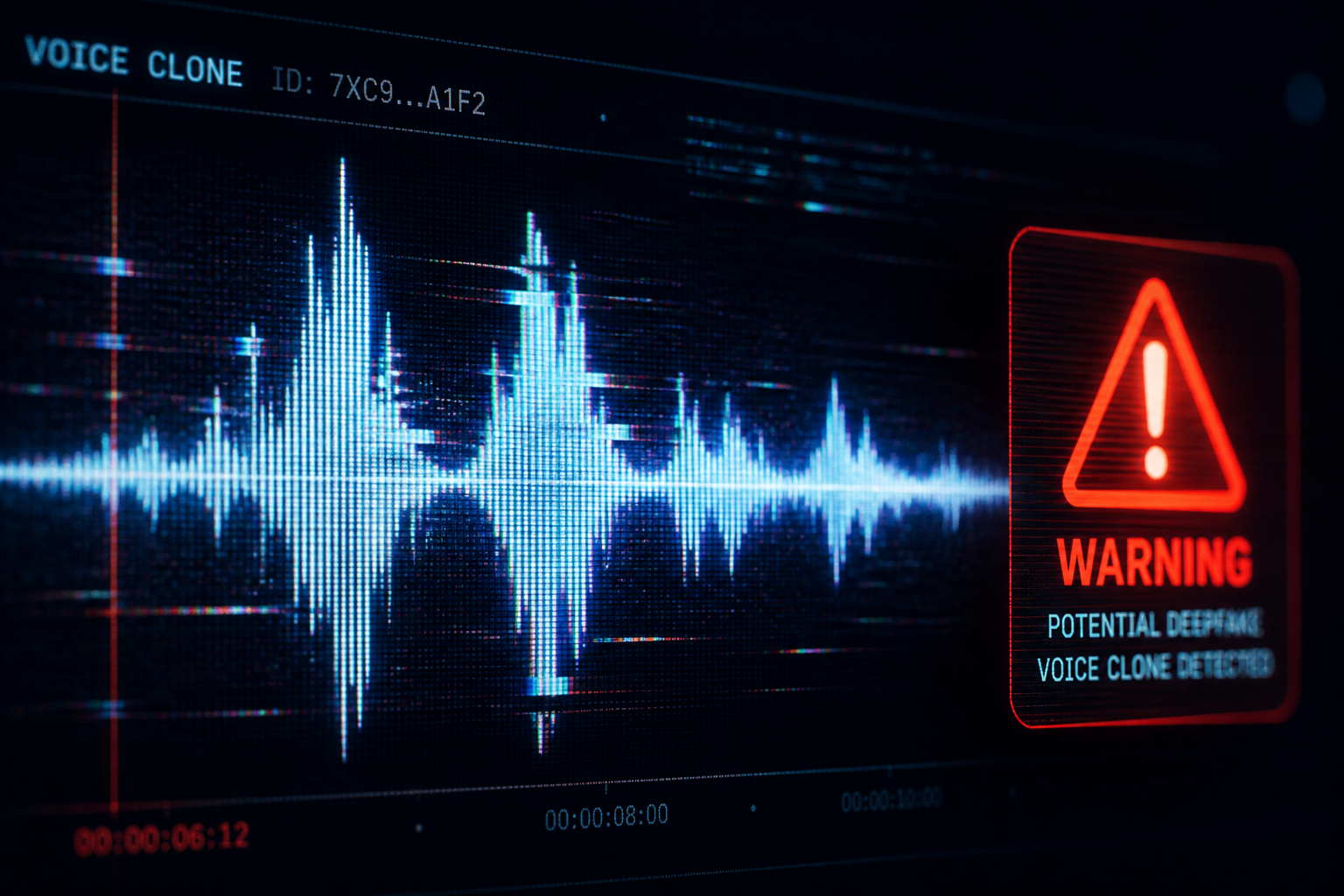
Synthetic Audio: Analyzing patterns in digitized voice.
⚠️ The Danger: Vishing (Voice Phishing) uses AI audio to impersonate CEOs or family members to scam victims into transferring money.
Similarly, LLMs (Large Language Models) create "textual deepfakes," mimicking specific writing styles to spread misinformation at scale.
Knowledge Check: The Basics
In a GAN architecture, which component is responsible for attempting to distinguish between real data and synthetic data?
- The Generator
- The Discriminator
- The Encoder
- The Latent Space
The "Tells": Visual Artifacts
No matter how good the AI is, it often struggles with biological and physical consistency.

- 👁️ Odd Blinking: Unnatural frequency or half-closed eyes.
- 🌓 Light Mismatch: Shadows on the face not matching the background.
- 🦷 Dental Blur: Teeth that look like a single white block.
- 👂 Ear Geometry: Asymmetrical ears or strange lobes.
The "Tells": Audio & Context
Analyzing the audio and the "frame" of the media is often more effective than staring at pixels.
Audio Red Flags: robotic cadence, missing breaths, or metallic "ringing" in the background.
Contextual Clues: Why is this person saying this now? Does the aural environment (wind, echo) match the visual setting?
Remember: The most convincing part of a deepfake is often the emotional reaction it triggers, which shuts down your critical thinking.
Case Studies: The Two Sides
Deepfake technology isn't inherently "evil"—it depends on the intent.
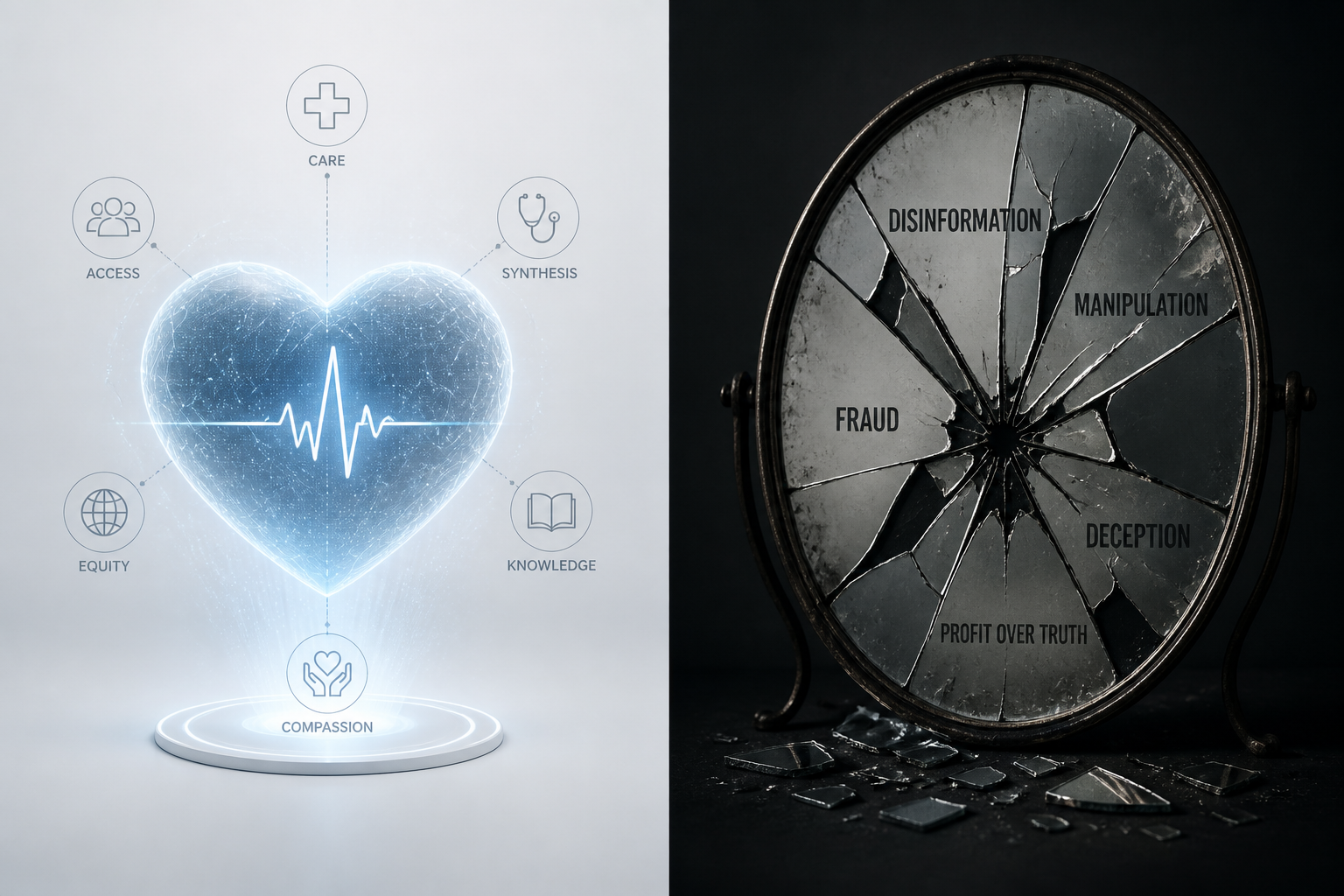
Dual-Use: The tension between innovation and exploitation.
Positive Use
Medical simulation, accessibility tools for those who lost their voice, and high-end cinema (de-aging actors).
Malicious Use
Political disinformation, non-consensual explicit content, and corporate fraud.
Knowledge Check: Detection
Which of these is a common biological "tell" that AI struggle to replicate realistically in video?
- Skin pigmentation
- Blinking frequency and reflections
- Hair swaying in wind
- Facial symmetry
The SIFT Method
When you encounter a suspicious clip, don't just trust your eyes. Use the SIFT framework.

🛑 Stop: Recognize the emotional trigger. Pause before sharing.
🔍 Investigate: Check the source. Is it a known parody account or a verified news agency?
🔎 Find: Look for a better version. Does other reputable media report the same event?
📍 Trace: Find the original context. Was the clip edited from a longer, different video?
Ethics & Consent
The most dangerous aspect of deepfakes is the erosion of consent. When a likeness can be stolen, the "self" becomes a public commodity.
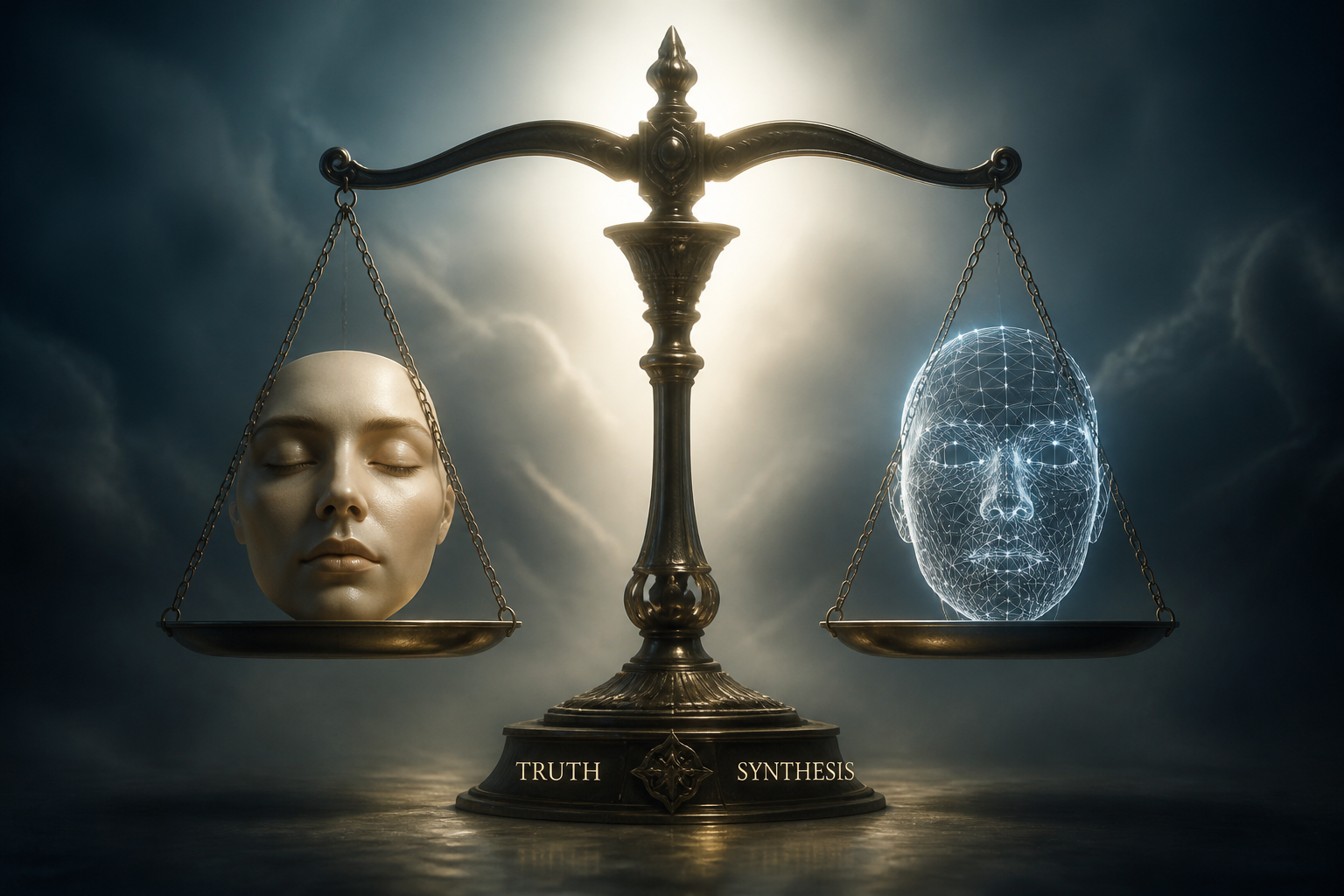
This raises critical questions: Who owns your face? If a deepfake of you commits a crime, how do you prove it wasn't you?
The Liar's Dividend
Deepfakes create a secondary problem called the Liar's Dividend.
This is the phenomenon where a public figure can deny a real recording of their misconduct by claiming, "That's just a deepfake."
When everything could be fake, the truth becomes optional. This degrades the very concept of evidence in society.
Knowledge Check: SIFT
You see a clip of a politician saying something shocking. You've "Stopped" and "Investigated" the source. What is the purpose of the "Trace" step?
- Search for a higher-resolution version of the video
- Check if the user who posted it has a blue checkmark
- Find the original source to see the full, unedited context
- Decide whether to report the content to the platform
Key Takeaways
Final Certification Assessment
It's time to test your synthetic media literacy. You will be presented with 5 scenarios and technical questions.
✅ Passing Score: 80% (4/5 Correct)
🚫 No Feedback: You will see your final score at the end.
Scenario 1: GAN Dynamics
Inside a GAN, if the Discriminator successfully detects every single fake the Generator produces, what is the likely outcome for the Generator?
- It will stop functioning and the GAN will crash.
- It will begin to produce identical copies of the training data.
- It will adapt by evolving more sophisticated patterns to trick the Discriminator.
- It will outpace the Discriminator and create perfect fakes immediately.
Scenario 2: Technical Detection
You are analyzing a high-quality deepfake of a world leader. Which of these technical anomalies would most strongly suggest the content is synthetic?
- The speaker has a slight accent that differs from their usual dialect.
- The lighting on the face is inconsistent with the shadows of the surrounding environment.
- The video was uploaded from a location in a different time zone.
- The background contains a low-resolution architectural detail.
Scenario 3: SIFT Application
You've found a suspicious clip. After stopping, investigating the source, and finding similar reports, you move to the "Trace" step. What are you doing?
- Searching for a higher-resolution version of the video.
- Analyzing the pixel metadata for GAN fingerprints.
- Identifying the original, unedited source and its context.
- Reporting the video to the platform for removal.
Scenario 4: The Liar's Dividend
A politician is caught on tape making a controversial statement. They immediately claim the recording is a "deepfake" despite it being 100% authentic. This is an example of:
- The Forger's Paradox
- The Semantic Void
- The Liar's Dividend
- The Synthetic Echo
Scenario 5: Architectural Logic
How do Diffusion Models create images differently than GANs?
- They use a single network instead of two competing networks.
- They add Gaussian noise to an image and learn to reverse the process.
- They only work with audio and a second AI converts it to visual.
- They do not require a training dataset to generate images.